Starting you car in the winter can prove to be an even tougher exercise than appeasing your wife the day after you have missed out on your wedding anniversary. Some suggestions that have been offered by a leading car driving expert have been shared here, just to help smoothen out this arduous task.
The car engine should be actually kept off until the time you are actually ready to move. The modern cars of today do not require their engines to be warmed. The engine should be kept in an ‘on’ position only if one requires running the demister/heater before starting the journey.
The windows should be cleaned from both inside as well as outside – if the windows have dirty screens, they are more likely to gather mist quicker.
Any snow that might have fallen on the bonnet and roof of the car, and also the windows, should be cleaned off immediately.
Once you step into the car, you have to be sure that all additional electrical features have been turned off (things like lighting, heaters and the likes) before you actually start the car.
Once you decide to start the journey, only then the heater and the engine should be switched on; failure to do the same by switching them on much earlier would stem up the windows. If the car is fitted with air con, it also needs to be on as the screen retains its dryness through the same.
If the car has been provided with an ‘ice setting’, the same should be used.
As the expert rightly points out, it is very important for people to spend time preparing their car to face any weather conditions. This will ensure that the car gives a consistent performance throughout the entire journey. The simplest method of doing so is to have your battery checked regularly and also to ensure that the screen wash provided to you has antifreeze components.
Hyundai Motor India Limited, the largest passenger exporting company of India and 2nd biggest automaker launches the LPG variant of Hyundai i10, as a part of its initiative for promoting non-polluting and eco-friendly transport. It is available for the price of Rs. 4.16 lakhs, which is Rs. 27,630 more as compared to existing petrol model. The i10 features a Blue Drive is fuel efficient and eco-friendly range of Hyundai and gets factory installed LPG kit boasting features, which meets international standards in terms of safety and performance. The company has launched the eco-efficient Blue Drive feature in next generation i10 in its 1.1 Magna and 1.1 Era trim levels.
Mr. H.W. Park, Chief Executive Officer and Managing Director at Hyundai Motor India Limited said that the LPG variant of i10 is a feasible alternative for discerning buyers seeking low running cost. With the introduction of this model, the company is lengthening the eco-friendly initiative. It believes in preserving the environment by producing and developing eco-friendly vehicles, which run on low emission fuels. The 1.1 Magna trim level of i10 is available for the price of Rs. 4,30,659, while the 1.1 Era for Rs. 4,16,144. Motivation for the all new i10 comes from an iRDE2 1.1 litre engine and comes with easy petrol to LPG shift that provides distinctive combination of unrivalled fuel economy and dependable performance.
Another excellent feature introduced by Hyundai Motor India Limited for LPG variant of i10 is the Alternator Management System (AMS), while decelerating, power supply to battery is normal, and during acceleration it limits power. It comes with Manual Shift Indicator, the first in its segment. The maximum fuel tank capacity for LPG variant is 34 litres, while for petrol is 35 litres. The shoppers will have an option to select from petrol and LPG models. The all new i10 is all about quality and not exorbitant prices. Top notch quality, attractive looking materials, comfortably supportive seats, controls that feel solid and precise and instrument you can really read; that is the lasting beauty of the company. According to Hyundai, its LPG kit is Automotive Research Association of India (ARAI) certified and is impact-resistant as well. It is also authorized by Department of Explosives (DOI).
Hyundai Motor India Limited is a completely owned subsidiary of Hyundai Motor Company in India and is the second biggest automobile manufacturing firm after Maruti Suzuki. It was incorporated in the year 1996 by South Korean automaker, Hyundai Motor Company. When it entered into Indian automotive industry in 1996, the brand was unknown all over India. Now, its state of the art, fully integrated production facility in Chennai boasts testing capabilities, most sophisticated production and quality in India.
The largest car manufacturers of India, Maruti Suzuki, are expanding its global dimensions and have started exploring newer markets across the world. This move is aimed at countering the reduction in demand of cars in the Indian market. A Board Member of MSI, Mr. Bhargava, quoted recently that the company was not very hopeful of generating growth in their sales numbers in the current financial year and said that the company would be more than happy in just achieving a break even number.
Sales of Maruti cars in India have been primarily affected by the often rising fuel prices as well as the higher interest rates. To add to this, problems cropped up in the company’s manufacturing facility at Manesar; to compound the problems that they are facing. MSI has taken the decision to explore newer automobile markets across the globe and this move is expected to take place pretty soon. Some newer models that the company has planned out are also going to be launched in the Indian markets. It is expected that the newer models will come with engines compatible to CNG and LPG fuel.
The sales figure of the company has also taken a hit due to a number of competitive brands having emerged. Every major auto manufacturer in the Indian market has come up with at least one offering in the segment of small cars, thereby making it tough for Maruti Suzuki India to even hold on to their market share. The recently launched Eon from Hyundai is expected to offer stiff competition to the best selling Indian vehicle, the Maruti Suzuki Alto.
The market is high on speculations that the Chevrolet Sail will be the car that is going to replace Aveo U-VA as the premium hatchback offering from the company in the Indian auto market. The Chevrolet Sail, minus all its body fittings except for its ‘Badge’, has been recently seen doing test rounds. What can easily be assumed by seeing this model is that it does not differ much from the model, which is being phased out. The interiors cannot be commented upon much, as they were not very clearly visible. However, expectations are on that the vehicle could be given a 1.2 L or even possibly a 1.4 L petrol engine. A diesel engine variant is also going to be there but its capacity is yet to be ascertained.
It has been rumored that the Company is considering having the 1.3 L diesel engine of the Fiat. No details on pricing or any other specifications of the Chevrolet Sail have come out into the public forum as of now. The Aveo, since its launch, has not been made subject to any major changes; this however does not indicate that the vehicle has been driving huge volumes. Since its very launch, the Aveo has enjoyed only a mediocre level of success in the hatchback segment. The auto major has quietly gone about its task of identifying the present scenario as being the ideal for its reviving its market share in the hatchback segment. The car industry is already burdened with a lot of launches planned in the near future and Chevrolet has now contributed its bit towards spicing up the market. News that is creating a lot of hype is the plans of General Motors to come out with another sedan-like vehicle in the near future.
All these developments help us understand logically the strategy that General Motors is following. In order to compete effectively against rival brands like Tata Manza and Maruti Swift Dzire, they have taken up an aggressive approach aimed at boosting their sales and market share by coming out with these new launches. The Chevrolet Sail has been developed for the Indian domestic automobile market whereas the supposed new sedan-like vehicle could be made available in the Chinese market in both hatchback and sedan variants.
Renault, the car manufacturers from France, has always had plans to grow big in the Indian market. The auto giants are coming out with their fourth product for the Indian market, Renault Duster, an SUV, which can be expected to have its launch in the middle of 2012. Till date, only a few details of this new vehicle have been made available. The best among them is that the Duster is expected to be launched in the country with five variants, including both petrol as well as diesel engines. According to sources, the engines that are being planned are the 1.6L for the petrol variant and 1.5L for the diesel one. There have been a lot of speculations in the market regarding what the pricing of this vehicle will be, however what has been known till date is that the Indian pricing of the vehicles will be in the range of Rs.7-11 Lakh. Having given a reasonable pricing to the vehicle, the auto company has hopes of generating around 50,000 units of sales worldwide, inclusive of its sales in the UK.
The interiors of the Renault Duster have distinct similarities to that of the Logan, something that readily catches the eyes. If one can go back to the not so distant past, they would recollect that the Logan was the product of a not very successful partnership that had been forged between Renault and Indian automakers, Mahindra. The Logan did not have interiors that one could really feel very proud of. If the Renault Duster retains the same interiors, then it is not very likely that it will get much success. Therefore, Renault has decided to bring in a certain amount of changes, to make the interiors more exciting. The control mechanism for the power windows at the rear, which in the past could be operated only from the dashboard, has now been provided on the insides of the doors, where they ideally should be.
Discussing about the engine, the Renault Duster 1.5 L diesel variant is the same engine as the one that powered the Fluence, the first individually designed sedan from Renault. This engine had also driven the Logan, now popularly termed Mahindra Verito. This diesel engine will be provided two variations, the first one having a maximum power output of 85Bhp whereas the second one would generate peak power of 110Bhp. Speculations are gaining ground that the Duster would be provided with a right-hand driving option for the UK markets as well. However, Renault will not gain higher profit margins through the duster in India as it has exceeded the 4m length prescribed for SUVs thereby entitling it to higher excise duties.
Skoda Auto India, a completely owned subsidiary of Skoda Auto, a Czech Republic automobile manufacturing company announced the introduction of Skoda Yeti 4×2, following the success of earlier launched Yeti 4×4. Its range is extended with two-wheel drive diesel option available for the price of Rs. 13.20 lakhs. It is also expected to further drive the vehicle’s success into new customer groups. The Yeti will be available in two different trim levels; the Ambition and Active with plenty of high end features such as Vario Flex, Electronic Stability Program and Hill Hold Control. In 2010, it has been well received by experts securing eight automotive awards. Similarly with Yeti 4×3, the company provides best-in class performance, sport utility vehicle, versatility and safety technologies in most manageable dimensions.
Well design, stylish, powerful, generously voluptuous and uncompromisingly safe, the all new SkodaYeti 4×2 will hold benchmark position in its category. The Active variant will be available for the price of Rs. 13,20,970, while the Ambition for Rs. 14,05,379 lakhs. Powering the Skoda Yeti 4×2 is a diesel 2.0 litre burly engine, which is good for pulsating 250 newton meters of torque at 1500-2500 rpm and 110ps of power at 4200 rpm. It is available in five different colors; these include Aqua mist, mato brown, brilliant silver, magic black, candy white and cappuccino beige. The culmination of uncompromising safety, raw power and robust design is what defines the all new Skoda Yeti. It provides you with uninhibited conveniences and comfort, further providing you an experience of its superlative powers.
The Yeti’s Climatronic Dual Zone Air Conditioning System ensures every corner of the vehicle is well ventilated. The adjustable rear air conditioning vents result in even cooling and uniformly pleasant ambience. Equipped with 6.5 inch TFT LCD color touchscreen display, it has winning combination of easy to use and looks, which can be doubled as Parktronic and Climatronic systems. Together with integrated six-CD changer system and eight speakers, the Yeti 4×2 is truly party-ready. The Yeti is 4223mm in length, wheelbase of 2578mm, ground clearance of 180mm, 1793mm in width and 1691mm in height.
Skoda Auto India Private Limited, most commonly known as Skoda Auto India was incorporated in the year 2001 in November. It is a completely owned subsidiary of Skoda Auto, a Czech automobile manufacturing company and also a division of Volkswagen Group Sales India. It has its production facility situated at Shendra, on the outskirts of Aurangabad, which is shared by Audi India for manufacturing Audi A6 and A4 models as well.
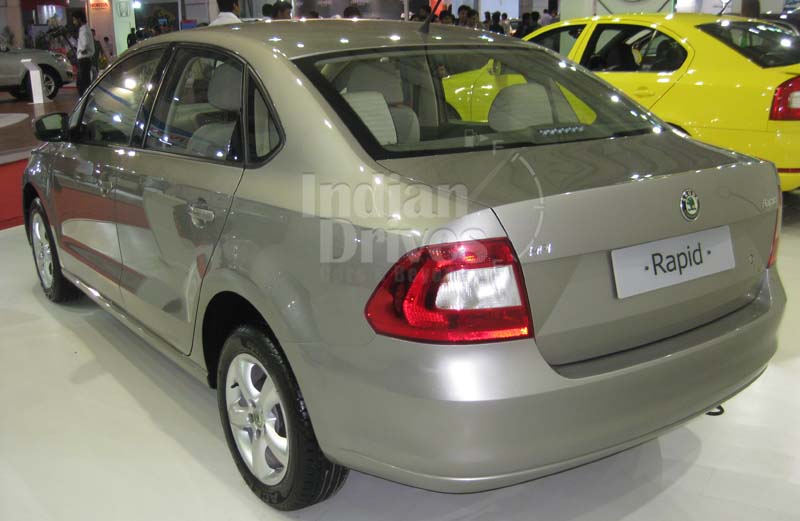
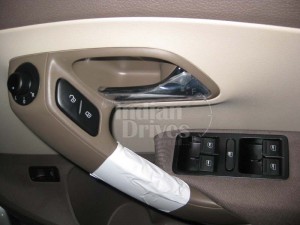
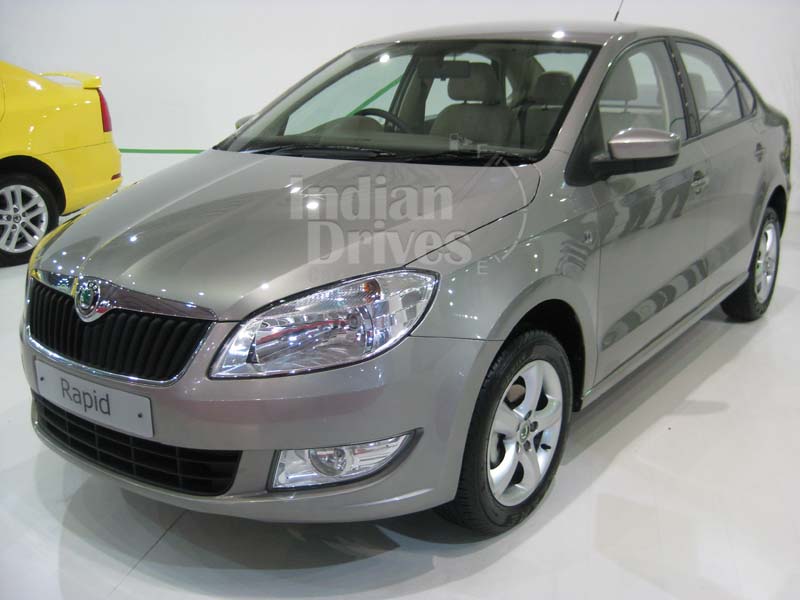
Skoda Rapid is the much awaited sedan of the company, which is based on the platform of Vento and shares most of its components such as suspension, engine and transmission. It is a wonderful example of true art fused with technology and science. Designed to flawlessly flow with muscular frame of Rapid, the body colored mirrors are optimally placed. Its 15 inch alloy wheels are significantly more stable and lighter providing enhanced and well balanced driving dynamics. Scientifically recessed, sleek and body colored door handles make the perfect first impression of all new Rapid.Check on Road Price
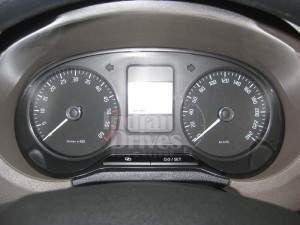
The Skoda Rapid was officially introduced in the month of November 2011 that inherits the DNA from Volkswagen Vento. As common with other premium luxury saloons in this category, the all new Rapid cover much of broader aspects, which includes brightly illuminated information cluster, dual tone upholstery, centralized console, driver assist, adjustable seats, audio system, armrests, headrests, spacious legroom and headroom, most importantly comfort at its very best and tilt steering.
Exteriors:
When we first looked at the Skoda Rapid, we realised that it is actually much better looking than what it seems to be in photos. With a big and prominently visible nose, the Rapid seems to be larger than the Vento also feels like striking a better balance. The grille, the headlights and the fog lamps have been totally influenced from Skoda Fabia. But it looks like some important changes are incorporated so as to have the key elements of Skoda’s face on the designing. The chin has been altered a bit and new designs have been given to the bonnet and the fenders. Once we move to the back, the major difference that one sees how varied the details on the back lights are; inspiration has been sought from Skoda’s well-known ‘C’ motif. There has been some intricate changes to the back side bumpers as well as the boot lid.
Interiors:
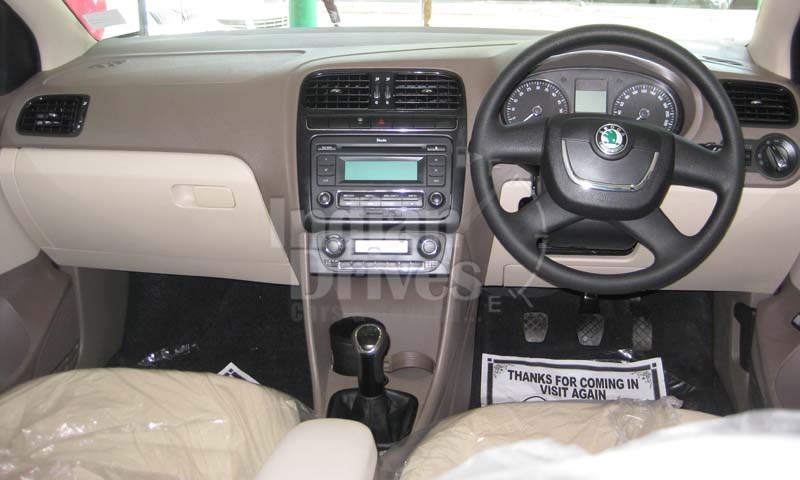
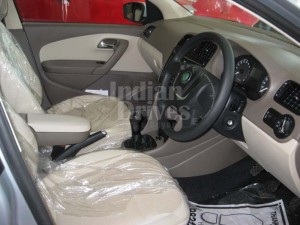
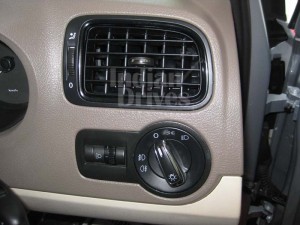
Once inside the vehicle, we found out that the cabin has designs that are very similar with the Vento, the only exception is the steering wheel, which has a distinct Skoda heritage marked all over it (steering-mounted controls are not present), audio system, gear levels and instrument panels. The Rapid is provided with an optional climate control also. The central console, which has been finished in black, stands out a bit though because there seems to have been certain mismatches in how its parts have been designed. The buttons, climate control and the vents have been inspired from the Volkswagen whereas the audio system having large fonts and buttons are an imprint of the Skoda.
Engine Model:
The petrol variant of the Rapid is very much available, however the diesel engine model is considered to be the more important one in terms of market acceptance. The engine has adopted the same 1.6-litre unit that has been given to the Vento, hence it can automatically be inferred that the maximum power generated of 105 bhp and torque of 25.5kgm are exactly the same for both the vehicles. The motor however appears to be more refined in comparison to the Vento; while the engine does not distort when the vehicle is revved up from 1600rpm reaching a peak at 5000rpm; therefore the performance has been analyzed as very strong in the diesel version
The petrol model cannot be simply written off though. It has its key positives as well, the best part being the fantastic pick up. the petrol version has enough inherent strength to be compared favorably with the Vento and hence proves a good vehicle to drive. However, it does not peak to the level of thrills that the Honda City provides, but that is something that should not be included in this discussion, as we are comparing the Rapid against the Vento here.
Controls:
The light steering in the Rapid makes it easy to drive across city roads in an almost effortless manner. We stand testimony to this fact as we negotiated the Mumbai traffic on our way to the expressway. On rough patches of road, the Rapid felt pretty comfortable, with absence of the up and down motion you associate to other cars. Whatever stiffness the vehicle has is totally compensated by its comfort to passenger type negotiation of the speed breakers and potholes, which are a characteristic of Indian roads; indeed it looked better than the Vento in this aspect. There is a sense of solidity associated with this vehicle. When travelling at peak speeds, the response from the steering was excellent and the car proved very agile in taking corners. As we went for a speed drive once we moved into the expressway, the agility of pick up, the smoothness in driving, the efficiency with which it responded to our commands simply bowled us over.
Models and Pricing:
This impressive vehicle built by Czech manufacturers, Skoda, is being launched initially with three trims – Active, Ambition and Elegance (comes with 15 inch alloy wheels, safety enhanced by side airbags for front passenger and driver). Naming of these models is a part of the new strategy of branding, the tagline that has been introduced being, “Simply clever”. Skoda Rapid Price is expected to be kept at Rs.6.7 lakhs.
A drive on the Skoda Rapid made me and my friend’s fans for life. How soon are you test driving one?
The Indian branch of the Honda Motor Company stated on Thursday that they had significantly brought down their car production in the month of November because of a crisis in receiving parts from Thailand, due to floods raging havoc in this country from Southeast Asia.
A spokeswoman of Honda’s Indian operations, who wished to remain unnamed, said that though the company had a plan to produce 8,000 vehicles November onwards, they would be making half that number this present month as they were facing a paucity of auto components.
She also said that this shortage in supply was even worse than what had been experienced when Japan was hit by the Tsunami in March. Production remained very fluid as the company continued assessing its situation on a weekly basis.
Honda India imports certain under-body and electronic car equipments from Thailand.
The Honda Siel, with 99.9% ownership of Honda and the remaining by Siel Ltd from India have been making the Jazz and Brio hatchbacks along with their medium sized sedans, the Accord and the City in their Greater Noida factory of the northern Indian state, Uttar Pradesh. Their sports utility vehicle the CR-V is also sold in India by importing the same.
In order to scale down this impact from shortage of supply parts, the company is trying to procure the same from the factories of their Thai vendors in Japan and China.
Mercedes Benz continually thrives to give its customers the best of comforts, working on these lines, the Indian unit of the world’s largest manufacturers of premium vehicles, has launched the Auto Hangar, its latest showroom in Mumbai. Located at Prabhadevi, this showroom is the biggest in Mumbai and is expected to become the most in-demand showroom of the company in the city. This new Mercedes-Benz showroom is going to be inaugurated by the MD and CEO, Mercedes-Benz India, Peter Honegg and will also be attended by other distinguished members of Team Mercedes-Benz.
Discussing about this inauguration, Peter Honegg said that this was in lines with the company’s mission of being a pioneer in providing customers with ultimate experiences. Mumbai customers of the company have already been subject to highest levels of service and the company continued in its endeavor of providing them the best of everything. Auto Hangar, the partners of the company, had great knowledge about the requirements of its Mumbai customers and hence Mercedes-Benz expected that this teamwork would scale newer heights through the new dealership point. Auto Hangar had been representing their brand in India 1997 onwards and both of them have grown together in the Indian market. Both the partners shared the same commitment and passion towards their valued customers. They were confident that their Mumbai customers would further feel pride of ownership of their vehicles following the inauguration of the new dealership.
The new showroom encompasses an area of 6,000 sq ft. and is the largest dealership in Mumbai. Along with having display of the latest cars, the showroom also have a dedicated center for accessories that would feature all the new add-ons that Mercedes-Benz would come up with. Staying true to its commitment of providing “Best or Nothing”, a stylish customer lounge has also been featured in the showroom. The showroom has been designed to offer the best of features aimed at taking care of all the automotive needs that their customers would have, which would range from sales of new cars, provision of spare parts as well as helping them get the best financing options for their vehicles.
The Auto Hangar Group MD, Mohan Mariwala spoke about this new showroom stating that it would display all the latest models from Mercedes-Benz including Their new E-Class, C-Class, GL-Class, S-Class, E-Class Cabriolet, ML-Class, E-Class Coupe, CLS-Class, SLK-Class along with all their high performing cars from the company’s AMG Range that would include the SLS AMG and the G55 AMG. This new showroom will exclusive cater to all latest models from Mercedes-Benz, to which added would be a state-of-the-art customer lounge as well as a team of dedicated sales personnel, who would work towards providing the best in customer delight and living up to the promises of the company. Auto Hangar has had a very long association with Mercedes-Benz dating back to the year 1997, a period in which they have sold a highly appreciable 4600 plus vehicles of the company. According to the MD o Auto Hangar, the new showroom was another huge step in the strengthening of relations between the two partners.
Yet another article comparing hatchbacks would make you yawn, however the fact that this is the most growing segment among Indian cars cannot be neglected. The Toyota Etios Liva has probably been one of the most anticipated cars in recent times, which started almost 5 years back when Toyota announced its intention of bringing a small car into the Indian market. Readers would find it interesting to know through this article whether the Company has been able to live to the expectations that have been created in the Indian market.
The Exteriors:
The Toyota Etios Liva in hatchback form looks much better than its sedan avatar. In its top-end VX variant, it indeed has one of the best looks given to a hatchback, particularly with its electric blue shade. Though the nose resembles its sedan cousin, other features are totally its own. Though not beautiful in conventional terms, its design elements have shaped up well giving it an overall pleasing effect.
The Ford Figo on the other hand is bogged down by its non-contemporary looks taken from the erstwhile Fiesta. Armed with a nice stance, sharp looking headlights and nice lines, the vehicle does have a typical solid European look.
The VW Polo, designed by Walter Da Silva, is indeed the best looking among the three. The combination of great looks without inherent aggression is what one can term as a head-turner that the vehicle has become. With great looking wheel arches and waist line, the Polo creates a great overall effect.
The Interiors:
The Toyota Etios Liva outscores the other two variants in terms of interior space offered, in fact one does not feel much difference between it and its sedan variant, though the wheelbase has been reduced 90mm. even when one pulls back the front seats all the way through, the rear passengers do not feel any cramping of leg space, further three fully-grown adults can comfortably occupy the back. The interiors are however shocking coming from a brand like Toyota with the use of cheap plastics. The features however are decent enough including audio controls being steering-mounted, comfortable steering wheel and a latest audio system.
The Ford Figo offers better quality materials compared to the Liva and the cabin is definitely merrier, especially if the dashboard comes in red. Some well placed as well as easy to use features have been provided, though the absence of head and back support in rear seats makes it a touch discomforting.
The VW Polo presents a very interesting picture. It does not match the above two vehicles in terms of features provided, it has a thin steering wheel tough to hold but with all these deficiencies, it still boasts having the best cabin among the three. The quality reflects in its build and material usage, thereby giving its riders the feel good factor of security and solidity once they are inside the vehicle.
The Engine Power:
All the cars are equipped with 1.2L petrol engines; however all have their respective inherent strengths. The Liva has a conventional engine with the glorious advantage of being the lightest among the three vehicles, weighing just 920kg. Efficiency rather than power is the key focus for this vehicle, which is essentially a city drive. The car has ease of driving with lighter and precise controls but its light weight goes against it when taken to the highways under windy conditions. The car peaks to a little more than 140kmph and requires downshifting for driving on hilly roads. Handling the car can give you combined effects of comfort and sportiness. Hence, the Liva can be deemed a car that has in it to satisfy all its segments of riders.
The Ford Figo has the least powerful engine amongst the three cars but does surprise you with its performance provided you know the correct combination of using its gears along with the correct amount of revolutions. If not, you got get the feeling of being slowed down by the Figo.
The VW Polo on the other hand looks the least refined among the three cars in the power aspect, literally. It has got a lesser cylinder compared to the other variants and accelerates slower than both. But here ends the negativities, it also achieves 155kmph top speed, the best among the three. It has been provided with such a combination that handling the vehicle is superb in all ride conditions and different speeds of driving. It undoubtedly provides the best overall experience in terms of driving and handling.
The Final Word:
The Liva has come up with the best engines, is easiest to drive, has superb spacing in the cabin and has all aspects of practical city driving, but is badly let down by its interior quality. The Figo is a good value for money vehicle, as well. However, the Polo rules this segment till date and indeed would be the best buy as on date.
Daimler AG, the largest truck manufacturing company of the world is gearing up to introduce its offerings in India by 2nd half of 2012, which is reportedly eying a larger share of local truck market pie. Daimler, an iconic international marque whose interest in trucks goes back over a 100 years is tutoring a full Indian avatar even going to extent of calling itself Bharat Benz. Its operations in the country have been built from scratch with no readily offered international blueprint for help. Mr. Marc Llistosella, Chief Executive Officer and Managing Director at Daimler India said that they are a domestic player. It is an Indian form. The Indian unit’s parent marketed over 3.5 lakh truck models in 2010, gathering approximately 24 billion euros in the process. Its entry in India was originally planned through a partnership with Hero Group.
Nevertheless, the latter pulled out in the year 2009, leaving Daimler AG for making India charge on its own. Daimler has planned to deal with India in a particular manner, launching things unidentified to enormous operations of the company anywhere else. In the month of February 2011, it introduced the Bharat Benz marque for Indian market, the first timer ever; the German maker has introduced a country-specific marque. As per the report, Daimler has put together advisory council in India, including software Services Company Cognizant’s Lakshmi Narayanan, Bharat Forge Chairman and Managing Director Baba Kalyani, former Finance Secretary Arun Ramanathan, lawyer PS Raman and HDFC Managing Director Renu Karnad.
By forming this panel, Daimler AG is following footsteps of other international MNCs such as Novartis. Microsoft, Bosch and Siemens in India. It is not the only truck manufacturing eyeing India, there are plenty of others such as Navistar, Volvo and Nissan. Navistar, Volvo and Nissan have tie-ups with Mahindra and Mahindra, Eicher and Ashok Leyland respectively. Daimler AG is a German car company. By unit sales, it is the 13th biggest car manufacturing and 2nd biggest truck manufacturing company of the world. Apart from automobiles, it designs and develops buses and offers financial services via its Daimler Financial Services. It also owns most important stakes in aerospace group EADS, parent and high technology Company of Vodafone McLaren Mercedes racing team McLaren Group along with Mitsubishi Fuso Truck and Bus Corporation, the Japanese truck manufacturing firm.
Of course, German counterpart MAN of Daimler is now going solo, after newly purchasing stake from Force Motors, its Indian partner. MAN’s move has come after Volkswagen purchased mainstream control in MAN international.
The Mid-sized sedan segment in India is bustling with action, following the recent launch of the Skoda Rapid. It means that with its launch, the Skoda Rapid has become the 3rd major launch in this category of vehicles in India in the recent times – the other two being the Nissan Sunny and the Hyundai Verna. This has further intensified the battle for supremacy within this segment as other players like Honda City, Volkswagen Vento, Maruti Sx4 and Fiat Linea have already been slogging out for the top spot. In this article, we try to make a comparison between the three new entrants into the segment, on the basis of certain key parameters.
Pricing:-
Taking the base as the ex-showroom prices of the cars in Delhi, it is found that the middle variant of the Skoda Rapid car costs Rs.7.09 Lakh whereas the Nissan Sunny has a starting price of Rs.6.88 Lakh. The Hyundai Verna has a starting price of Rs.7.7 Lakh. However, one thing that has to be definitely mentioned here is that the Verna has 2 variants priced at greater than Rs.10 Lakh ex-showroom, hence with the added costs on taxes and other factors would enhance the on-road pricing substantially higher than that as well.
Options and Variants:-
The Rapid has been made available both in Diesel and Petrol variants and has been equipped with both Automatic and Manual transmission. The Hyundai Verna also has the same features incorporated. The Nissan Sunny, however, has been made available only in Petrol variant and automatic transmission has also not been provided on this vehicle.
Dimensions of the Vehicles:-
The Skoda Rapid has a length of 4386mm, width 1699mm and height 1466mm.
The Nissan Sunny has a length of 4425mm, width 1695mm and height 1505mm.
The Hyundai Verna has a length of 4370mm, width 1700mm and height 1475mm.
Engine specifications and Power Generated:-
The 1600cc Skoda Rapid engine delivers a peak power of 105Bhp.
The 1500cc Nissan Sunny engine delivers maximum power 99Bhp.
The Hyundai Verna rules in the power criteria with its 1600cc Petrol engine delivering maximum power of 123Bhp whereas its 1582cc Diesel engine has a peak power of 128Bhp.
Mileage:-
Mileage computed on the basis of ARAI standards show the Skoda Rapid trail behind at 15km/l, the Sunny is marginally ahead at 16.5km/l. Hyundai Verna rules this criterion as well at 17km/l for its petrol variant and 22.3km/l for its diesel one.
Safety Features Incorporated:
The standard version of the Nissan Sunny is equipped with ABS and Airbags with Automatic Climate Control provided in its Middle version. The middle variant of the Skoda Rapid includes features like ABS and Airbags whereas its top end version comes with Automatic Climate Control. The Hyundai Verna however is equipped with latest features like Reverse Parking Camera and Sensors, 6 Airbags and many more compared to the other two vehicles. However, its top end model out-prices the other two vehicles by Rs.50, 000 minimum, a cost if additionally paid can get these features incorporated into the other two vehicles as well.
Networks in India: This is where Hyundai Verna triumphs again as it has access to a huge number of dealership networks in the Indian market, followed much behind by the Skoda Rapid with Nissan Sunny at the end.
Based on the above-mentioned criteria, the Hyundai Verna, though more pricey, seems the right vehicle to buy. However, this is not the end-all about these cars; you might be interested in having certain other features on your car that might not have been elaborated here.
Automobile manufacturing companies plan to increase prices by up to Rs. 10,000 for compact vehicles and Rs. 25,000 for saloons for offsetting the impact of weakening rupee on import costs, despite the recent slump in sales. The executives of the company said that Skoda, Maruti Suzuki, Honda, Toyota and GM also plan to raise prices within days because the weakening rupee has pushed up costs of their imported parts significantly. It has destabilized approximately 17 percent against United States dollar since January, hitting all time low Rs. 52.73 last week. It has forced the automakers that import between 40 percent and 10 percent of components for various models for considering price augments.
A Senior Executive at Maruti Suzuki said that they will have to pass on the cost to discerning buyers for offsetting the growing impact of weakening rupee and increasing cost of producing diesel models, which are at present selling like hot cakes. Luxury car manufacturing companies like Audi, which imports completely produced vehicles for feeding local market are also expected to raise prices by Rs. 50,000. The Indian automotive industry has been the cruise with sales increasing at high double digit figures since 2 years, eventually falling in current fiscal year and before slowing down. There has been augmented competition in the market with international companies speeding up to the 2nd quickest growing car market of the world, launching plethora of made for India and new cars at highly competitive or reasonable prices.
Auto component maker, Bosch Ltd. is reportedly investing Rs.250 crore in the coming three years on their aftermath business. This has been aimed for increasing revenue generated from this division to touch Rs.3000 crore.
Reports state that Bosch is aiming to generate Rs.2000 crore in revenue from their aftermath business in the current financial year and also want to increase their training centers for the mechanics from the current figure of 11 to 15, in the coming three years. The V.P. (Automotive aftermarket) Bosch Ltd. S Muralidharan has said that the company will be investing between Rs.200-250 crore within the coming three years for expanding their aftermath business. This would include increasing their centers for car servicing to 750-800 outlets across the country against the current figure of 500 outlets.
This investment would form a component of the total investment plan of Rs.2500 crore till 2013 that the company had announced earlier in the year aimed at diversification of business, augmentation of capacity and setting up R&D centers in India. Muralidharan also said that the company had been growing strongly at double digit rates and expected the trend to continue. The company was also hopeful of crossing a turnover of Rs.3000 crore within the upcoming 3 years against the Rs.2000 crore that they expected to achieve in the current financial year. However, the company was also losing out about 30% on their aftermath business mainly because of spurious and fake parts available in the market. However, they had experienced a positive signal in the reduction of the impact of these spurious parts due to raids that had been conducted by them jointly with the local authorities and also because of the education that they were imparting to their mechanics.
The mechanic training centers would be increased to 15 from the 11 that are there at present, within the coming three years. The company has plans of training 25,000 people in the current year with the figure expected to double in the coming three years, reports stated.
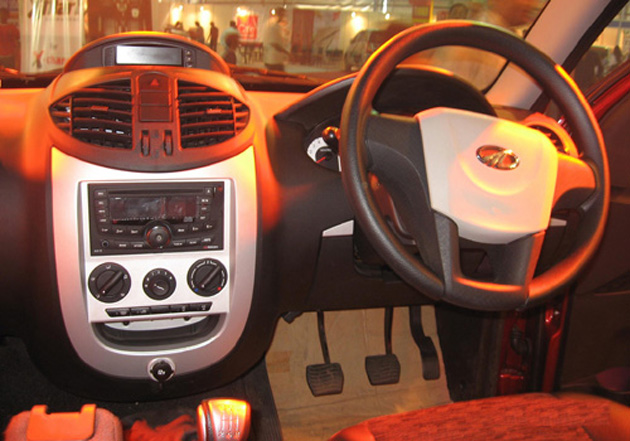
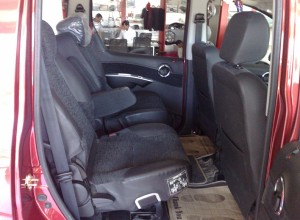
Mahindra Mini Xylo is a compact XUV and is a lighter variant of the Mahindra Xylo, with respect to size and engine power. The vehicle is a 5-seater and marks the entry of Mahindra & Mahindra into the segment of 4-meter cars. This new compact version of the popular SUV from Mahindra will imbibe all the positive traits of the original version, the Mahindra Mini Xylo.
Features Expected:
It is expected that this car will be as aggressive in looks as the standard Xylo has branded for itself. However, the Mahindra Xylo Mini will not contain some of the high-end luxury features that the parent model has. The omissions have been necessitated for the vehicle to adjust to its pricing of Rs.5 lakh compared to the Rs.7 lakh of the original version. Features that are expected to be incorporated into the Mahindra Mini Xylo include Bumpers in body colour, Trip Meter, Tachometer, A/C minus the feature of climate control, Seat belts for rear passengers, Central Locking, Power windows, Remote-controlled Fuel refilling system, Rear wiper, manually adjustable driver seats, Rear A/C vents and many others.
Power and Comfort:
The engine provided to the Mahindra Mini Xylo will be 1.5L turbocharged CRDi variant, which ensures free flowing of the oil and thereby results in excellent performance on the road. The engine has been made available with 5-speed manual gearbox, however information regarding the variants of this vehicle has still not been revealed. The Mahindra Xylo Mini is also expected to retain all the components relating to safety that has been provided in the parent model. However, though detailed specifications of this vehicle have still not been disclosed yet; one can expect that it will have an impressive quality of upholstery provided within.
Mileage:
Though we are yet to receive details on the mileage aspect; given the engine it runs on, the Mahindra Xylo Mini is expected to deliver 10 plus km/l in city traffic and peak to 15 plus km/l going into the highways.
Footnote:
The Mahindra Xylo Mini is expected to offer all the comforts of driving that its original variant, the Mahindra Xylo has been providing so successfully on the Indian roads. The benefit to the end users is that being dimensionally small and a little low on power, it can suit requirements of smaller families and at the same time, it comes with a huge advantage in the pricing scenario. The Mahindra Xylo Mini is expected to be priced around Rs.5 lakh, which will be substantially lower than its parent model, which costs Rs.7 lakh.
The dream of owning a car is something everyone has. However, most people are disappointed by the huge investment required for the same. But in recent times, the scenario of buying cars in India has undergone a total change with numerous institutions of car financing available for giving you the requisite finance for buying your dream vehicle. However, inadequate awareness about this market often creates problems for the buyers as they end up paying higher interest rates. Though there is an availability of many private and public financing institutions, lack of awareness and knowledge often lead to the buyers paying much higher amounts. The article aims to guide you on some critical aspects that will come in handy when you plan to get your car financed.
You need to personally approach the automobile finance providing institutions; it is always preferable to go to those financial institutions that have been certified by RBI. Public sector banks like SBI, Punjab National Bank as well as Private Banks like HDFC, ICICI and the likes offer auto financing at easy to pay installments.
You need to shortlist that bank, which will offer you the most finance at lower interest rates. Generally, interest rates offered by government banks are lesser than the private ones. Be sure to check on additional charges that might be levied. This could include approval and filing charges, which differ from bank to bank, but it is normally in the range of Rs.6,000 to Rs.7,000 approx.
Though government banks have a policy of fixed interest rates, the same can be negotiated for in private banks.
Be careful in choosing the type of interest rates – there are two “Floating” and “Fixed”. Floating rate initially looks appealing as it is kept at values below Fixed Rates, but it is subject to fluctuation in the market and carries the risk of increasing in the future, if so decreed by RBI. Fixed rates however remain constant irrespective of fluctuations in RBI rates.
Driving on the city road can be a painful exercise, especially during peak traffic hours. It is highly challenging to navigate your car through congested roads and the problem compounds if you are travelling through unknown territory. Particularly in India, you will definitely come across congested expressways, innumerable red lights, continuous construction work and many unfamiliar routes.
This makes drivers angry and run out of patience. However, there are certain measures, which if employed, can make driving in the city an easier exercise.
Stay Highly Alert when Driving: City roads are congested with different modes of traffic including buses, trucks, cars, scooters as well as pedestrians. Hence, one needs to be highly alert and keep an eye in all directions, before taking turns. The alertness should be at its peak in junctions, as most vehicles move in simultaneously from different ends.
Novice Drivers need to be extra cautious: Difficulty of driving is compounded if the person driving is relatively new or does not know the routes. It is very difficult reading signs on city roads while driving particularly when the road spreads out to multiple directions at junctions. Therefore, the driver needs to be highly vigilant during these circumstances.
Give preference to small cars: If you need the car for communicating within the city on a daily basis, it is more sensible to go for a smaller variant. In peak traffic hours, the roads are always clogged; hence having a small car to negotiate the traffic is much easier compared to larger sedan-like vehicles. Also, the parking sites are customized mainly to entertain smaller cars.
Automatic-Transmission the better choice: Though cars having manual-transmission offer better driving experience, it is advisable to go for vehicles with automatic-transmission in areas of higher traffic, though only a few such cars are available in India as of today. Prominent among them are – Hyundai Santro, Maruti Zen, and Hyundai i10 among others.
The Mileage Factor: Since one is not expected to drive the car in high speed on city roads, one should try and maintain constant speed. This is because speeding followed by immediate slowing of vehicles impacts their mileage. Frequent starting and stopping also hits hard on the fuel economy aspect. Hence, one should drive at a constant speed, as much as possible, for saving fuel.
Avoid Lane switching: Changing lanes frequently in congested roads increase risks of accidents. Agreed that you can reach your destination faster but you also increase the risks of colliding with other vehicles.
Installation of Safety Features: It is always advisable to have safety features installed in your car. Normally, city driving would require features like car-alarms, anti-lock braking, theft prevention devices and starter disabling switch. This not only ensures safety while driving but also can help bring down the risks of theft of your vehicle.
City driving can be a bit of a risk. But by being alert, you can ensure performing the same in a safe manner.
A sea change is being observed in the automobile industry with respect to the segment of light cars. Mercedes-Benz looks like maintaining its reign at the top for a long time. Another sporty lightweight offering from the company, the new Mercedes-Benz SL Roadster is likely to reach Indian shores pretty soon. In specific terms, the company has set a deadline of this year end for making the car available in India. If you want to get the feeling off what this new roadster would look like, all you have to do is frame a picture of a car with an aluminium body frame. The pricing of the Mercedes-Benz SL Roadster is a matter that is subject to a lot of speculation at this moment.
The best feature that an aluminium body frame provides is that it makes the car very light in weight and the auto manufacturer has the intention of taking full advantage of this metal property by having the car built from scratch, using the same. The overall weight of the vehicle is expected to get a reduction of 110kg, given its new makeover in aluminium. An even lighter store than Aluminium happens to be Magnesium, and this has been included in designing the rear panel of the Mercedes-Benz SL Roadster. Apart from its feature of being light in weight, Magnesium also comes handy in reducing the effects of corrosion, particularly in those parts of the vehicle that are highly subject to corrosive forces. Also, its inclusion cumulatively reduces the weight of the vehicle by 140kg as compared to the erstwhile model. However, steel has been retained in those joints that require high durability. The A-pillars have been given steel support, as they require the same.
Some manufacturers might give Carbon-fiber a consideration for the development of light weight cars, as it is lesser in weight than aluminium. However, if the factor of stability is analyzed, Aluminium has been seen to perform much better. The car industry is seeing a radical change happening with increasing manufacturers showing keenness in developing light weight cars. The greater efficiency towards fuel consumption by these cars seems to be pushing the car manufacturers towards that direction. They also exhibit a commitment towards the environment, with lower levels of emission. Even domestic manufacturers in India, like Mahindra and Maruti Suzuki have developed interest in designing the same.
Maruti India is continuing with its struggle on diesel engine variants of cars while their competitors including Hyundai have already started looking for alternate routes. Maruti India has not been able to make timely delivery of the Swift, its star hatchback. The condition that the diesel variant of the Swift hatchback finds itself in is further worse. Therefore, it has become critical for Maruti Suzuki India to seek help from others for the supply of diesel engines. It seems sensible to collaborate with Fiat, who has the experience of having supplied the 1.3L diesel engine, which the Maruti Swift uses. As per latest reports, Fiat and Maruti India have reached an agreement in which Fiat is going to supply Maruti with 1 lakh units of diesel engines every year for ensuring that the Swift diesel is delivered on time.
The Indian auto segment is experiencing a peak in demand for diesel cars with a 22% growth in sales. This is in sharp contrast to the overall car sales scenario, where the industry has suffered a 1.5% negative growth. The rising prices of petrol have been identified as the primary reason behind this. The gap between the prices of petrol and diesel has increased to Rs.25, which is pushing more and more customers towards diesel cars. But the scenario is not entirely rosy for the diesel variant as well. All of a sudden, the Government has given an ultimatum for raising excise duties for diesel cars. Auto manufacturers are trying to deal with this situation in their own way.
Maruti India is undeterred by these developments and is showing increasing preference for the diesel car variants, which seem to be in continuous ascent these days. Diesel cars are fast outselling their petrol variants; the difference between the two is ever-widening. Maruti itself is experiencing the pain of piling inventory of their petrol cars in most of their sales outlets. Sales figures in the auto market also strongly indicate towards the same. There has been a 6% growth in sales of diesel cars in the first half of the current financial year compared to the same period last year. Showing full confidence in their diesel variants of Maruti Ritz and Maruti Swift, the company recently hiked the prices of both these vehicles by Rs.10,000 each.
Maruti Suzuki has taken the decision of entering the segment of sub-800cc cars. Two cars of this segment that are already operational in Japan are going to be unveiled at the January Auto Expo in Delhi, for analyzing response of prospective customers as well as competitors.
These cars named MR Wagon and Palette are powered by the smallest engine Suzuki has designed till date. If the feedback received at the expo meets their expectations, production versions of either or both the cars will be readied to cater to the Indian auto market. The vehicles are expected to be launched within 2-3 years, sources revealed to Indian Drives.
Though both these vehicles have 660cc petrol engines, they have segmented themselves separately from the Tata Nano, which has been highlighted as the cheapest car in the world, priced Rs.1.53 lakh with a 624-cc engine. The price difference between the standard Tata Nano and the base-model 800cc Maruti Alto is around Rs.1.43 lakh.
The Maruti Alto, which is presently Maruti’s best-selling car, will retain its entry-level position for the company in India, as the two new cars are expected to have either same or greater pricing than the Rs.2.96 lakh of the Alto.
Though the two new cars have lower engine specifications compared to the Alto, they will be provided with more spacious interiors, due to having an improved height vis-à-vis the Alto. The company is yet to announce any additional features for these vehicles.
The strategy behind bringing in these small cars is to reverse the declining trend of the company’s market share in the segment of passenger cars. Recent figures indicate that Maruti has experienced a drop of 7% in its market share in October this year compared to the same period previous year (down to 38% from 45%).
The company also plans to make a series of new launches, including an entry into the MUV segment. This yet unnamed vehicle will be a 7-seater with compact dimensions and the company hopes to drive big volumes through this. Indian engineers at Maruti have developed this MUV with support from the R & D team at Suzuki.
Sources claimed to Indian Drives that the vehicle is ready and could be launched into the Indian market within March 2012. This MUV will fight for capturing the market against the two present operators – Tata Sumo and Mahindra Bolero. Maruti has plans of exporting the MUV as well.
The company also has plans of bringing in a new compact MPV (multi-purpose vehicle), which is popularly known as a ‘van’, in India. This vehicle has been named ‘Ertiga’ and comes with a dual purpose petrol-cum-diesel engine.
Another vehicle that can be expected in the near future from Maruti is a compact SUV. The concept version of this vehicle will be shown in January at Auto Expo and the production model will be launched in the market towards the end of 2012. The only vehicle that Maruti has in this segment is the good old Gypsy, which is used mostly by military personnel nowadays.
A top official from Maruti said that the competitive nature of the market had made them take up a new approach. They were now showcasing their best capabilities by bringing in these latest models. This was also an exercise to exhibit to the world that Maruti was prepared for the future.







 This investment would form a component of the total investment plan of Rs.2500 crore till 2013 that the company had announced earlier in the year aimed at diversification of business, augmentation of capacity and setting up R&D centers in India. Muralidharan also said that the company had been growing strongly at double digit rates and expected the trend to continue. The company was also hopeful of crossing a turnover of Rs.3000 crore within the upcoming 3 years against the Rs.2000 crore that they expected to achieve in the current financial year. However, the company was also losing out about 30% on their aftermath business mainly because of spurious and fake parts available in the market. However, they had experienced a positive signal in the reduction of the impact of these spurious parts due to raids that had been conducted by them jointly with the local authorities and also because of the education that they were imparting to their mechanics.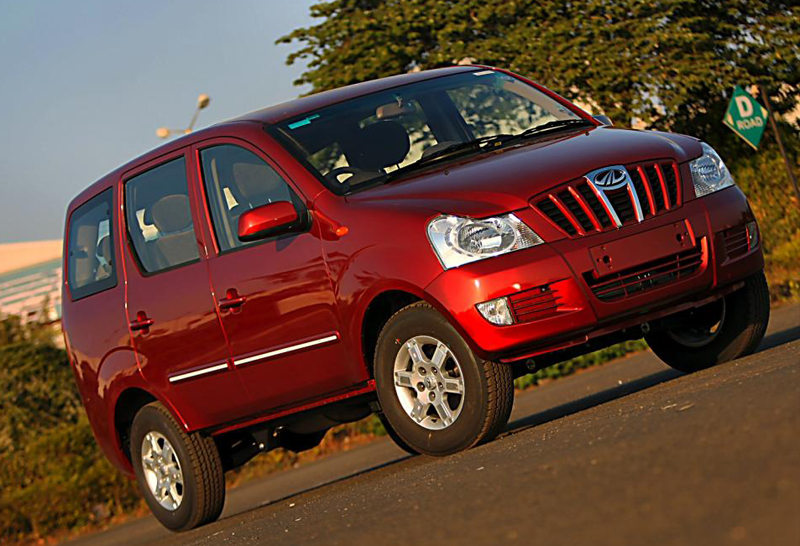



 Some manufacturers might give Carbon-fiber a consideration for the development of light weight cars, as it is lesser in weight than aluminium. However, if the factor of stability is analyzed, Aluminium has been seen to perform much better. The car industry is seeing a radical change happening with increasing manufacturers showing keenness in developing light weight cars. The greater efficiency towards fuel consumption by these cars seems to be pushing the car manufacturers towards that direction. They also exhibit a commitment towards the environment, with lower levels of emission. Even domestic manufacturers in India, like Mahindra and Maruti Suzuki have developed interest in designing the same.
 The
The  The company also has plans of bringing in a new compact MPV (multi-purpose vehicle), which is popularly known as a ‘van’, in India. This vehicle has been named ‘Ertiga’ and comes with a dual purpose petrol-cum-diesel engine.